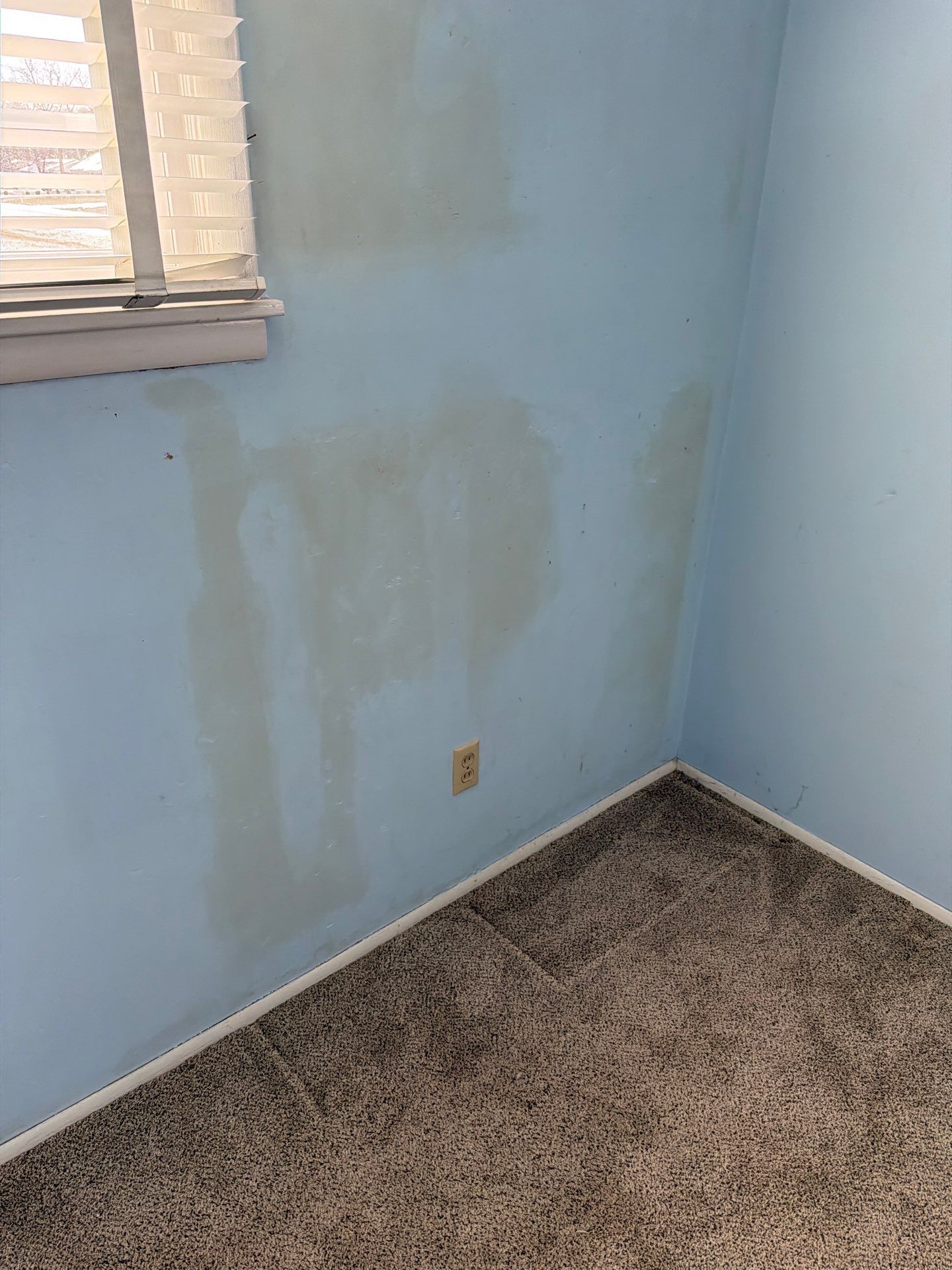
The Call That Started Last October
A homeowner in a 1990s two-story near Middletown called us at 6:47 a.m. on a Tuesday. He had gone up to grab Halloween bins and stepped on insulation that squished. No visible ceiling stain yet. No drip in any bedroom. Just a wet attic and a confused homeowner. When our tech climbed up forty minutes later, he found a roughly two-foot stretch of decking soaked black around a plumbing boot whose rubber gasket had finally split. The leak had probably been active for six to eight weeks. The fiberglass batts held about twenty-two gallons. The drywall below was still intact, but the paper backing on the insulation was already growing fuzzy gray colonies.
This is the part most homeowners do not realize. Insulation is the canary. By the time water shows up on your ceiling, the attic above has often been wet for a month or longer. Catching it early, like that homeowner did by chance, is the difference between a 1,800 dollar job and a 14,000 dollar one.
What We Actually Found Up There
On a different Middletown job last winter, we responded to what the homeowner thought was a small leak around a bathroom vent. The roof was fifteen years old, asphalt shingle, north slope. What looked like a vent issue turned out to be three separate failure points: the vent flashing itself, two nail pops where shingles had lifted in a windstorm, and a section of ice damming that had backed water up under the third course. The attic had standing water on the vapor barrier in three different spots, none of which connected on the surface.
That job taught us, again, that the visible leak is rarely the only leak. When we inspect a Middletown attic after a roof leak report, we are looking for moisture meter readings above 16 percent on the decking, darkening or cupping on the rafters, matted insulation, rusted nail heads (a tell that condensation or active wetness has been cycling), and any sign of mold growth on the underside of the sheathing. If you suspect a similar situation, our notes on hidden leak detection walk through the same meter-and-thermal approach we use on attic decking.
One detail that catches homeowners off guard: the wet spot on the ceiling is almost never directly below the actual leak. Water runs along the top of a rafter, drips onto a truss plate, travels another six feet, and finally pools on a low spot in the vapor barrier. On that bathroom-vent job, the stain was nearly nine feet east of the failed flashing. We have learned to trust the moisture meter, not the eyeball.
When the Story Goes Sideways
Not every Middletown attic call ends that cleanly. A homeowner near the older part of town called us after a contractor told him his ceiling stain was "just cosmetic." When we pulled back the insulation, we found active black mold across an eight-by-ten section of decking, two rafters that had softened enough to push a screwdriver into, and evidence the leak had been ongoing for closer to two years. That job involved partial roof deck replacement, structural sistering on the rafters, and full mold remediation after water damage. It came in around 11,400 dollars. His insurance denied most of it because the damage was deemed long-term and gradual.
The lesson there is timing. A leak caught in week one is a manageable repair. A leak caught in year two is a renovation. If you see a ceiling stain growing, hear dripping in your walls after rain, or smell that musty attic smell every time the HVAC kicks on, do not wait for the next storm to confirm it.
The Restoration Sequence, Told Through One Job
The Halloween-bin homeowner ended up being a textbook restoration. Here is how his week went, condensed:
- Hour one: tarp the roof from the exterior, stop active water intrusion, extract any standing water from the vapor barrier with a wet vac.
- Hours two through four: remove and bag the saturated insulation (about nine contractor bags worth), document everything with photos for his insurance carrier.
- Day two: set two air movers and a commercial dehumidifier in the attic, monitor decking moisture twice daily. Decking started at 28 percent. Target was under 16 percent.
- Day four: decking hit 14 percent. Treated the affected sheathing with an antimicrobial because we had caught early surface mold on two rafters.
- Day five: roofer replaced the plumbing boot and three shingles. We reinsulated with R-49 blown-in and rebuilt the small section of ceiling drywall below.
Total out-of-pocket after his deductible was 740 dollars. His carrier covered the rest because we documented the sudden-and-accidental nature of the failure correctly. For homeowners curious how that documentation translates to a claim, our breakdown of water damage restoration cost covers what insurance typically pays versus what falls to you.
What We Look For Before We Quote
When our tech arrives at your Middletown home, the inspection runs roughly an hour. We are checking attic decking moisture at multiple points, scanning rafters with thermal imaging, identifying the leak source from inside (it is faster and more accurate than guessing from the roof), pulling back insulation samples, and documenting everything for your claim. We give you a written scope before any work starts. If the damage is minor enough that you do not need us, we will say so on the spot. That honesty is part of why Middletown Water Restoration keeps getting called back, and why neighbors keep passing our number along after storms.
The Seasonal Pattern We See in Middletown
About sixty percent of our attic calls cluster between late November and early March. Ice dams, wind-driven rain, and the freeze-thaw cycle that loosens flashing all peak in those months. The other big spike is late summer, when severe thunderstorms tear at older shingles and lift ridge caps. A homeowner in a 1970s ranch called us in August after a single afternoon storm. The wind had pulled back a section of ridge vent. Forty minutes of sideways rain dumped close to fifteen gallons into his attic. He saw the ceiling stain by dinner. We were drying his decking by 9 p.m. That speed is why he had a 2,100 dollar job instead of a five-figure one.